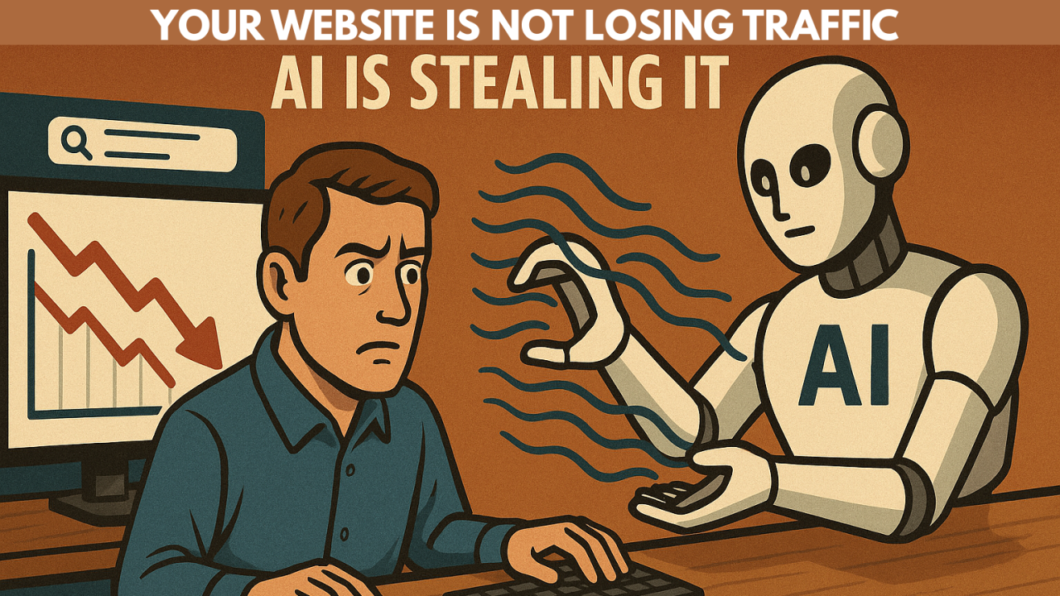
The digital landscape is experiencing a seismic shift that every business leader needs to understand.
The Old Way vs. The New Way
Remember when you had a question, you’d Google it, scroll through 10 blue links, and click through multiple websites to piece together an answer?
Those days are fading fast. Now, millions of people simply ask ChatGPT, Claude, or Perplexity and get a comprehensive answer in seconds. No clicking. No scrolling. No visiting your website.
Real-World Examples of This Shift
Recipe Websites: Food bloggers used to dominate search results for “chocolate chip cookie recipe.” Now people ask ChatGPT for the recipe and cooking tips directly. Sites like AllRecipes are seeing declining traffic as AI provides instant recipes without the life story and ads.

Tutorial Content: YouTube creators and blog writers who built empires on “how to tie a tie” or “how to change a tire” are watching their traffic plummet. People get step-by-step instructions from AI in seconds.
Product Research: Instead of visiting 5-10 review sites to compare laptops, consumers ask Perplexity “best laptop for video editing under $1500” and get a synthesized comparison with pros, cons, and recommendations.


What This Means for SEO-Dependent Businesses
If your business relies on Google traffic, this shift is like being a taxi company when Uber launched. The rules of the game have fundamentally changed.
Traditional SEO tactics—keyword stuffing, link building, ranking for “how to” queries—are becoming less effective when people get their answers directly from AI without ever visiting your site.
The Numbers Don’t Lie
- 40% of Gen Z now uses ChatGPT or similar tools as their primary search method
- Perplexity has grown from 0 to 100 million queries per month in just 18 months
- Google’s own search volume growth has slowed for the first time in decades
- Answer engines provide instant, synthesized responses instead of requiring website visits
While some of these numbers in themselves are large, however they are still a fraction of the seaches that happen TODAY on Google ( approx. 8.5 billion daily ) – However, this slow shift is an indicator of things to come.
Industries Feeling the Impact Most
1. Content Publishers BuzzFeed laid off its news division partly due to declining search traffic. Websites that relied on “listicle” content are seeing dramatic drops as AI can generate “10 tips for better sleep” instantly.
2. Local Service Providers Plumbers, electricians, and contractors who ranked for “how to fix a leaky faucet” are losing leads as people get DIY instructions from AI first, only calling professionals when they’re truly stuck.
3. E-commerce Sites Product comparison sites like Shopping.com are struggling as consumers get buying recommendations directly from AI, bypassing affiliate-heavy comparison pages.
Success Stories: Companies Adapting Well
HubSpot: Instead of just creating SEO content, they’re positioning themselves as the authoritative source AI models reference for marketing definitions and strategies. Their content is frequently cited by ChatGPT and Claude.
Khan Academy: Rather than competing with AI tutors, they’re integrating AI into their platform while maintaining their human-created curriculum structure that AI models reference.
Neil Patel: This marketing guru pivoted from pure SEO content to building direct relationships through newsletters, courses, and tools that provide value beyond what AI can offer.
How Forward-Thinking Businesses Are Adapting
1. Become the Source, Not the Destination Instead of competing for search rankings, focus on being cited by AI models. Create authoritative, well-researched content that AI engines reference and credit.

Example: Mayo Clinic’s medical content is frequently cited by health AI tools, maintaining their authority even when people don’t visit their site directly.
2. Embrace Direct Relationships Build email lists, communities, and direct channels. When people don’t find you through search, they need other ways to discover your value.
Example: Morning Brew built a 4-million subscriber newsletter that delivers value directly to inboxes, independent of search algorithms or AI summaries.
3. Optimize for AI Discovery Structure your content so AI models can easily understand and reference it. Think clear headings, factual accuracy, and comprehensive coverage of topics.
Example: Investopedia formats their financial definitions so clearly that ChatGPT consistently references them when explaining complex financial concepts.
4. Focus on Unique Human Value AI can summarize information, but it can’t replace human expertise, personal stories, or real-world experience. Double down on what makes you irreplaceable.
Example: Tim Ferriss pivots from general productivity advice (easily replicated by AI) to unique interviews and personal experiments that only he can provide.
5. Create AI-Resistant Content Develop content that requires human interaction, real-time updates, or personalized experiences.
Example: Fitness influencers are moving from generic workout posts to live coaching sessions and personalized program consultations.
The New Metrics That Matter
Instead of just tracking:
- Search rankings
- Organic traffic
- Click-through rates
Start measuring:
- AI citation frequency
- Direct traffic growth
- Email subscriber quality
- Community engagement depth
- Brand mention volume across AI platforms
The Bottom Line
This isn’t about AI being “good” or “bad”—it’s about adapting to reality.
Just like Blockbuster ignored Netflix’s streaming model, businesses ignoring the answer engine shift risk obsolescence.
Smart companies like Shopify are already building AI-first features while maintaining their core human value proposition. They’re not fighting the wave—they’re riding it.
The question isn’t whether this shift will happen. It’s whether you’ll lead the adaptation or get left behind.
Here’s something you can look at with respect to your business website !
- Audit what percentage of your traffic comes from informational searches that AI could answer

- Identify your unique human value that AI cannot replicate
- Test how often AI tools mention or reference your content
- Start building direct relationships with your audience through email or community platforms
What changes are you seeing in how your customers find information?
How is your business preparing for this shift?